Long Flights 101
December 22, 2025
You're settling into your seat for an eight-hour flight. Cramped knees, a tiny cup of water, and snacks that are mostly refined carbs. Over the next several hours, your body sits immobile while your muscles tighten and circulation slows.
The airline industry isn't designed to keep you healthy. It's designed to move you cheaply from A to B. Your health? That's your responsibility.
Long flights don't have to drain you. With a few simple strategies, you can arrive at your destination feeling energized instead of depleted.
Note: This protocol is most relevant for flights longer than 2-3 hours.
The Health Challenges
- Prolonged sitting: Slows circulation, causes stiffness and muscle tightness.
- Dehydration: Cabin air humidity is 10-20% (vs a comfortable 40-60%), plus limited water service.
- Poor nutrition: Airline meals are low in protein and fiber, high in refined carbs and sodium.
- Disrupted routine: Your meal timing, sleep schedule, and movement patterns are all thrown off.
You can control these with preparation. Here's how:
Strategy 1: Hydration is Non-Negotiable
Airlines serve about half a liter of water on a long flight. You need at least 1.5 liters for a 6-8-hour flight.
Dehydration isn't just about feeling thirsty. It causes fatigue, headaches, muscle tension, and makes jet lag worse. Proper hydration is your first line of defense against feeling terrible after a long flight.
How to Stay Hydrated:
- Carry an empty water bottle: Bring a reusable bottle through security (empty) and fill it at a water fountain after security. Most airports have bottle filling stations now.
- Don't be shy about asking: The flight crew expects requests for water. Don't feel embarrassed to ask for a full bottle or multiple cups. Your health is more important than worrying about being a bother.
- Set a reminder: Aim to drink about 200-250 ml every hour. Set a phone reminder if needed.
- Limit alcohol and caffeine: Both are diuretics that increase dehydration. Keep it to a minimum and follow with water.
Strategy 2: Bring Your Own Protein
Airline meals are carb-heavy and protein-light, with maybe 15-20g of protein. Protein maintains muscle, keeps you satiated, and stabilizes blood sugar. Running on refined carbs for hours leaves you sluggish.
What to Pack:
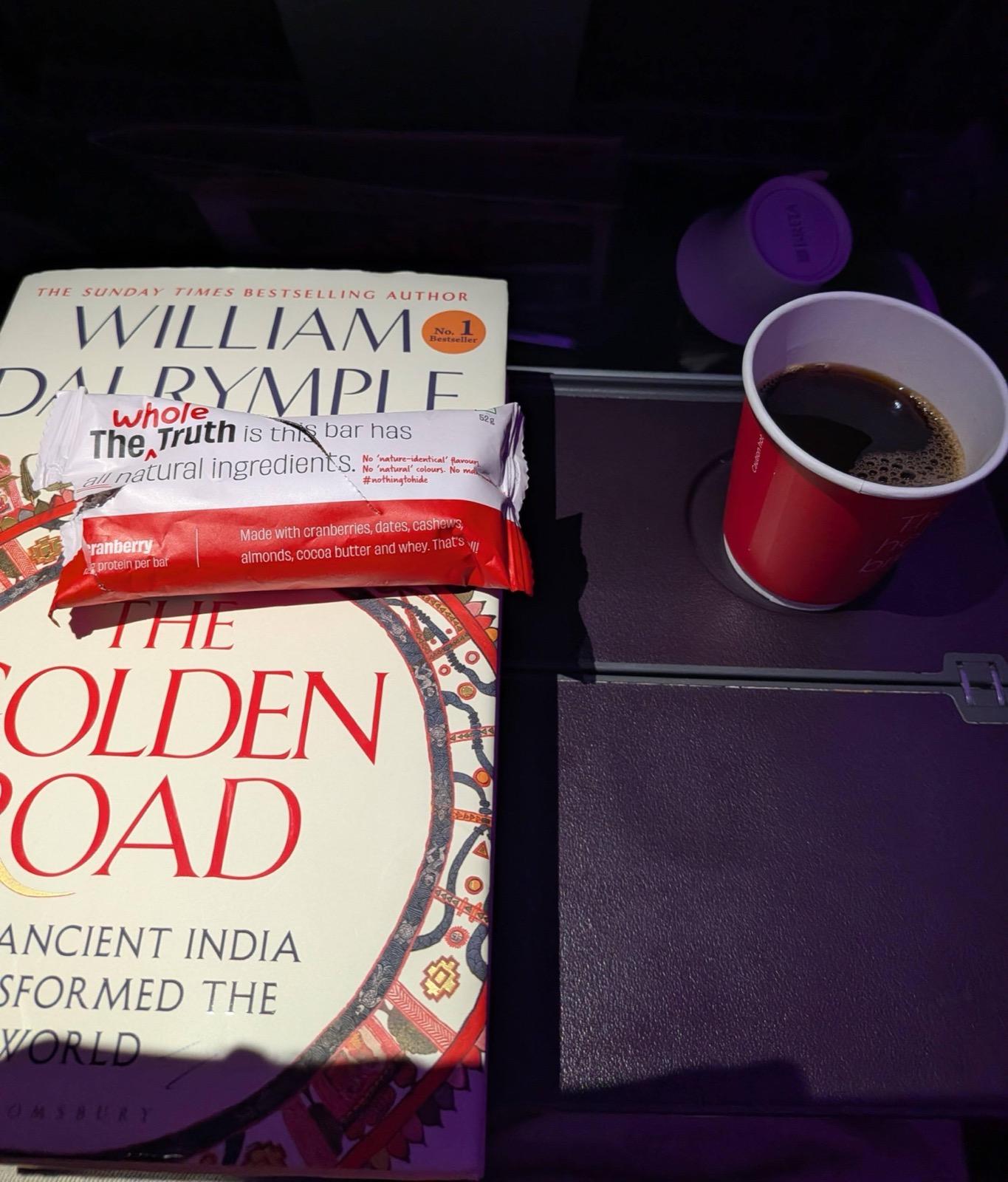
- Protein bars: Choose ones with at least 15-20g of protein and minimal added sugar. They're shelf-stable and travel-friendly.
- Protein powder sachets: Single-serve packets you can mix with water. I never travel without these. Just like I mentioned in my travel tips, protein powder is one of my non-negotiables.
- Protein yogurt: If you're picking up food at the airport, grab a high-protein Greek yogurt. Just make sure it's within the liquid restrictions if you're carrying it through security.
Strategy 3: Don't Forget Fiber
Airline meals rarely include fresh fruits or vegetables, leaving you without fiber. Long flights already mess with digestion due to immobility and cabin pressure. No fiber makes it worse, leading to bloating and discomfort.
Fiber-Rich Options:
Fresh fruit is your best bet. An apple, banana, or orange travels well, provides fiber and hydration, and keeps you satisfied. Pack one in your carry-on.
If you want more options: baby carrots, cherry tomatoes, or fiber-rich protein bars work too.
The combination of protein and fiber creates the perfect snack that keeps you satisfied and your digestion on track.
Strategy 4: Movement and Stretching
Extended sitting causes muscles to tighten and circulation to slow, leading to stiffness, discomfort, and worse jet lag when you land.
The solution is simple: move every 2-3 hours, even if it's just for a few minutes.
How I Handle This:
Set a timer for every 2-3 hours. When it goes off, stand up and walk to the back of the plane, stretch in the galley if there's space, then return. Even 3-5 minutes makes a difference.
Essential Stretches
Before boarding: Stretch your calves, hamstrings, and hips at the gate or in the lounge. Downward dog, toe touches, or standing quad stretches work well.
During flight:
Seated: Do these at your seat:
- Ankle Circles and Foot Pumps: Lift feet slightly. Circle ankles 10 times each direction. Then pump feet up and down 20 times. Most important for lower leg circulation.
- Seated Knee Lifts: Lift right knee toward chest, hold 1 second, lower. Repeat left. 10 reps per leg. Activates larger leg muscles.
- Neck Rolls: Drop ear to shoulder, roll head forward, continue to other side. 5 times each direction. Helps ease neck stiffness.
- Shoulder Rolls: Shrug shoulders up, roll them back and down, then release. 10 reps each direction. Helps reduce upper back tension.
Standing: Do calf raises (rise onto toes, lower, repeat 15-20 times), squats, and toe touches or a hamstring stretch.
Hack: Embarrassed to stretch in public? Use the lavatory for a quick reset if you want more privacy. I do this on every long flight.
Consistency matters more than variety. These movements every hour make a real difference.
Strategy 5: Rethink Alcohol
A drink can help you relax or pass the time on a long flight. But here's what you need to know: alcohol on a plane hits differently, and not in a good way.
Why You Should Minimize (or Skip) Alcohol:
- Amplified dehydration: Alcohol is a diuretic, meaning it makes you lose water. Combine that with the already-dry cabin air, and you're setting yourself up for serious dehydration.
- Worse jet lag: Alcohol disrupts your sleep quality. While it might help you fall asleep initially, it prevents deep, restorative sleep. You'll land feeling groggier.
- Poor decision-making: After a couple of drinks, you're less likely to get up and move, less likely to drink water, and more likely to make poor food choices.
If you do drink, keep it to one early in the flight and follow with water. Better yet, save the drink for after you land.
Strategy 6: Sleep According to Your Destination
Jet lag happens when your internal clock doesn't match your destination's timezone. The flight is your transition period, so use it strategically.
Sleep Strategy:
- Match destination timezone: Set your watch to destination time when you board. Try to sleep when it's nighttime there, stay awake when it's daytime there - even if your body disagrees.
- Use sleep aids: Eye mask, earplugs, and neck pillow improve sleep quality.
- Quality over quantity: Even broken sleep in the right timezone window helps adjustment. For more on optimizing sleep quality, check our recovery post.
Putting It All Together: Your Long Flight Game Plan
Before the Flight:
- ✓ Book an aisle seat for easier movement without disturbing others
- ✓ Pack your nutrition: protein bars, protein powder, fruit
- ✓ Bring an empty water bottle to fill after security
- ✓ Do quick stretches (calves, hamstrings, hips) before boarding
- ✓ Set a timer or reminder to move every 2-3 hours
During the Flight:
- ✓ Drink 200-250 ml of water every hour (aim for 1.5L+ total)
- ✓ Every 2-3 hours: walk the aisle and do stretches (seated and standing)
- ✓ Supplement airline meals with your own protein and fiber
- ✓ Limit or avoid alcohol, choose water instead
After Landing:
- ✓ Continue hydrating, you're likely still dehydrated
- ✓ Do a full-body stretch session at your accommodation
- ✓ Get back to your normal routine as quickly as possible
With these strategies, you'll arrive energized and ready to enjoy your destination. More importantly, you'll prove you can maintain your health priorities anywhere.
The airline industry isn't designed to support your health. But you now have the tools to take care of yourself, no matter where you are. Safe travels. Your health goes wherever you go.
Stay Updated
Short, honest notes from a fitness coach who’s been through the journey.
You'll receive an email with a confirmation link. Click the link to verify your subscription.
Check Your Email
I've sent you a confirmation link. Please check your email to verify your subscription.