Navigating Social Outings and Travel
August 21, 2025
You're at your friend's wedding. The cake looks incredible, the open bar is calling, and you haven't seen a gym in three days. Your carefully planned routine feels like a distant memory.
Or maybe you're on a business trip, staying in a hotel with no gym, surviving on airport food, and your sleep schedule is completely messed up.
Sound familiar? These scenarios are where most fitness journeys derail. Not because of lack of motivation or knowledge, but because life happens, and we don't have a plan for it.
Here's the truth: Travel and social events aren't obstacles to your progress. They're opportunities to build a truly resilient routine. The difference between someone who maintains their results long-term and someone who yo-yos isn't perfection. It's having a plan for imperfection.
In this post, we'll build your personal protocol for staying consistent when life takes you off your usual path. The goal isn't to maintain perfect adherence – it's intelligent damage control that keeps you moving forward.
Part 1: The Real Challenge
Let's be honest about what we're up against. Travel disrupts everything: your sleep schedule, your meal timing, your workout routine, and your environment. Social events put food and drinks front and center, often with emotional and cultural significance that goes way beyond nutrition.
The mistake most people make is treating these situations like emergencies, either by abandoning all structure or by trying to maintain their exact routine and feeling miserable when they can't.
The goal during travel and social events isn't progress. It's maintaining momentum. Think of it as cruise control rather than acceleration. You're not trying to lose fat or build muscle during your vacation. You're trying to return home in the same condition you left.
Part 2: Travel – Your Fitness Goes With You
Pre-Travel Planning: Set Yourself Up for Success
The battle is won before you leave home. Spend 10 minutes researching and planning:
- Research fitness options: Does your hotel have a gym? Are there day passes available at nearby gyms? Is there a park for running? Remember, you can always do bodyweight exercises in your hotel room or Airbnb – no equipment needed.
- Pack your essentials: I personally never travel without whey protein – it's my non-negotiable. Add nuts or protein bars for emergency nutrition. Resistance bands take no space but give you a full workout option.
- Set realistic expectations: Decide upfront whether this is a maintenance trip or if you're okay with some temporary deviation. Having clarity prevents guilt and stress.
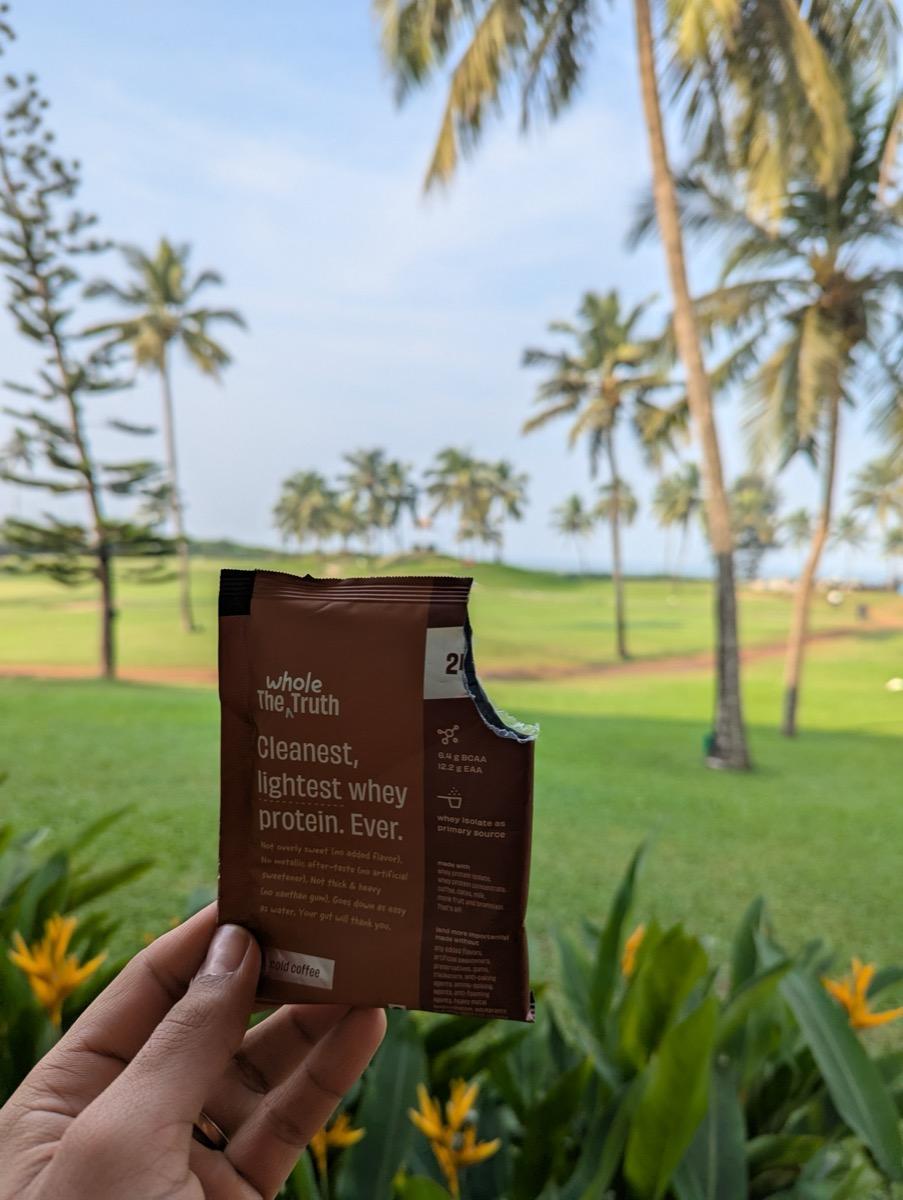
My travel essential
During Travel: Damage Control Strategies
Golden rule: You never want to be in a situation where you're hungry and you don't know what you're going to eat. This is where most travel nutrition goes wrong – when hunger hits and your only options are whatever's immediately available.
Sample Hotel Room Workout
Here's one example of a 20-minute bodyweight routine that requires zero equipment – feel free to adapt this to your preferences:
- Upper Body: Push-ups (modify on knees if needed)
- Lower Body: Bodyweight squats, Lunges, Single-leg glute bridges
- Core: Planks, Mountain climbers
- Format: 3 rounds of 45 seconds work, 15 seconds rest for each exercise
Is it equivalent to your regular gym session? No. But it maintains your movement patterns, keeps your body active, and most importantly, keeps your routine intact.
Nutrition During Travel
- Airport/restaurant meals: Prioritize protein when possible. Choose grilled options over fried. Don't stress about perfection – focus on not being overly hungry when making decisions.
- Stay hydrated: Aim for 2-2.5 liters of water daily (about 6-8 glasses). Travel is dehydrating, especially air travel, so track your intake to stay on target.
- Plan your meals ahead: Research restaurants near your destination, know what you'll eat before hunger strikes.
I actually documented a recent trip in this Instagram reel – just a casual vlog showing how these principles played out in real life during my travels.
Post-Travel Recovery: Getting Back on Track
This is where many people sabotage themselves. They return home feeling like they need to "make up" for lost time with extreme measures.
- Don't try to compensate: No extra cardio, no extreme dieting. Simply return to your normal routine immediately.
- Use your Progress Dashboard: Check your measurements and photos. You'll often find the impact was less dramatic than you imagined.
- Focus on consistency: The most important workout after travel isn't the most intense one. It's showing up consistently for the next few days.
Part 3: Social Events – Playing the Long Game
Social events are different from travel because they're usually shorter but more intense, and they often carry emotional significance. The key is strategic flexibility.
The 80/20 Strategic Approach
Not every social event deserves the same approach. Be strategic about when you indulge and when you maintain structure:
- Special occasions (weddings, milestone birthdays): Focus on the experience. Enjoy the celebration without guilt, but return to structure the next day.
- Regular social events (weekly dinners, work lunches): This is where you practice your skills. Be social while making mostly aligned choices.
- Ask yourself: "Is this a special occasion I want to remember, or a routine event where I can practice discipline?"
Pro tip for planned social events: You can save more calories for the meal by having lighter meals earlier in the day. If you know you're going to dinner tonight, have a protein-focused breakfast and lunch. This isn't about restriction – it's about smart allocation so you can enjoy the social experience without derailing your goals.
And if you end up eating more than planned and go above your calorie budget? Don't try to compensate everything the next day with extreme restriction. Instead, create a small deficit over the next 2-3 days. For example, if you went 300 calories over, aim for a 100-calorie deficit for the next three days. This approach is sustainable and prevents the feast-or-famine cycle.
Social Event Survival Checklist
- ✓ Focus on the people, not the food: Engage in conversations away from food stations. The social aspect is why you're there.
- ✓ Eat protein and fiber beforehand: A small snack with protein and fiber prevents you from arriving starving and making impulsive choices.
- ✓ Be mindful with portions: Fill one plate and eat slowly. This prevents mindless grazing and helps you enjoy the food more.
- ✓ Consider your drink choices: It's not necessary to have alcohol – there are plenty of great non-alcoholic options available. If you do drink, alternate with water to slow consumption and help with hydration.
- ✓ Share desserts: If you want to try something sweet, share it with others. You get the experience without the full caloric impact.
The Power of Planning Ahead
The fittest people don't wing it – they have specific protocols for common scenarios. The time to make decisions about food and exercise isn't when you're hungry, tired, or in a social situation. It's when you're clear-headed and aligned with your goals.
Before any trip or event, take 5 minutes to write down your intentions. Not strict rules, but flexible guidelines that reflect your priorities. This simple act of planning ahead eliminates the need to make difficult decisions in challenging moments.
Remember: Consistency doesn't mean perfection. It means having a plan for imperfection and getting back on track quickly.
With these strategies, travel and social events transform from threats to your progress into opportunities to strengthen your relationship with health and fitness.
Stay Updated
Short, honest notes from a fitness coach who’s been through the journey.
You'll receive an email with a confirmation link. Click the link to verify your subscription.
Check Your Email
I've sent you a confirmation link. Please check your email to verify your subscription.